
Gathering Time is a moving-image work developed through a long-term interdisciplinary collaboration and knowledge exchange with the Resurfacing Doggerland project team (funded by the Dutch National Science Foundation, NWO), led by Dr. Hans Peeters.
Between March 2023 and April 2026, I travelled to the Netherlands for a series of residency periods, meeting with experimental archaeologists, ancient DNA geneticists, collection managers, citizen scientists and specialists in the prehistoric North Sea. Conversations on work being done to unravel and reimagine the impacts of rapid sea-level rise on Mesolithic hunter-gatherer populations in the now sunken land mass connecting Great Britain to mainland Europe, crossed memory, time, loss, the construct of a nation state, and what it means to hold something in our hands.
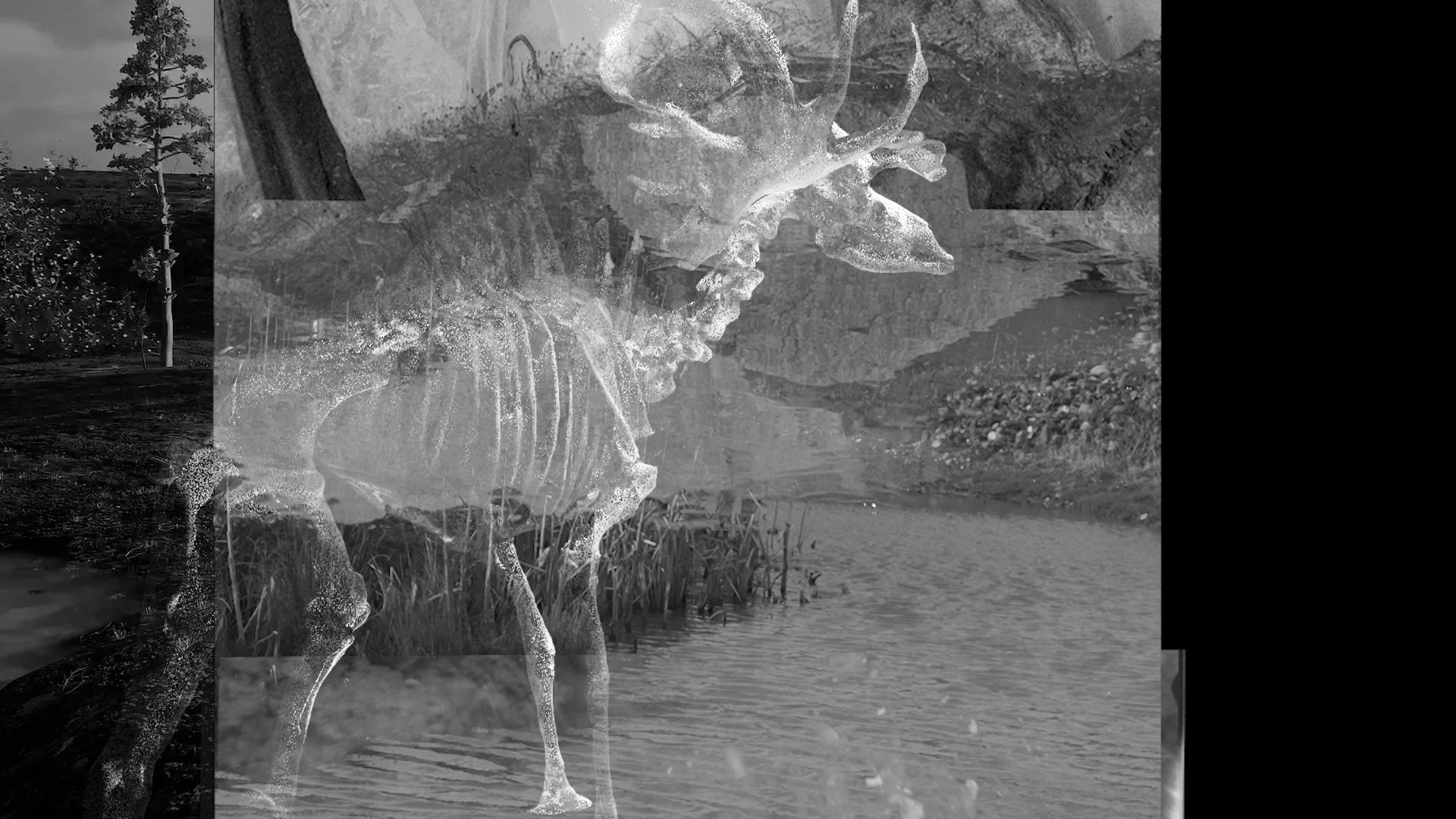
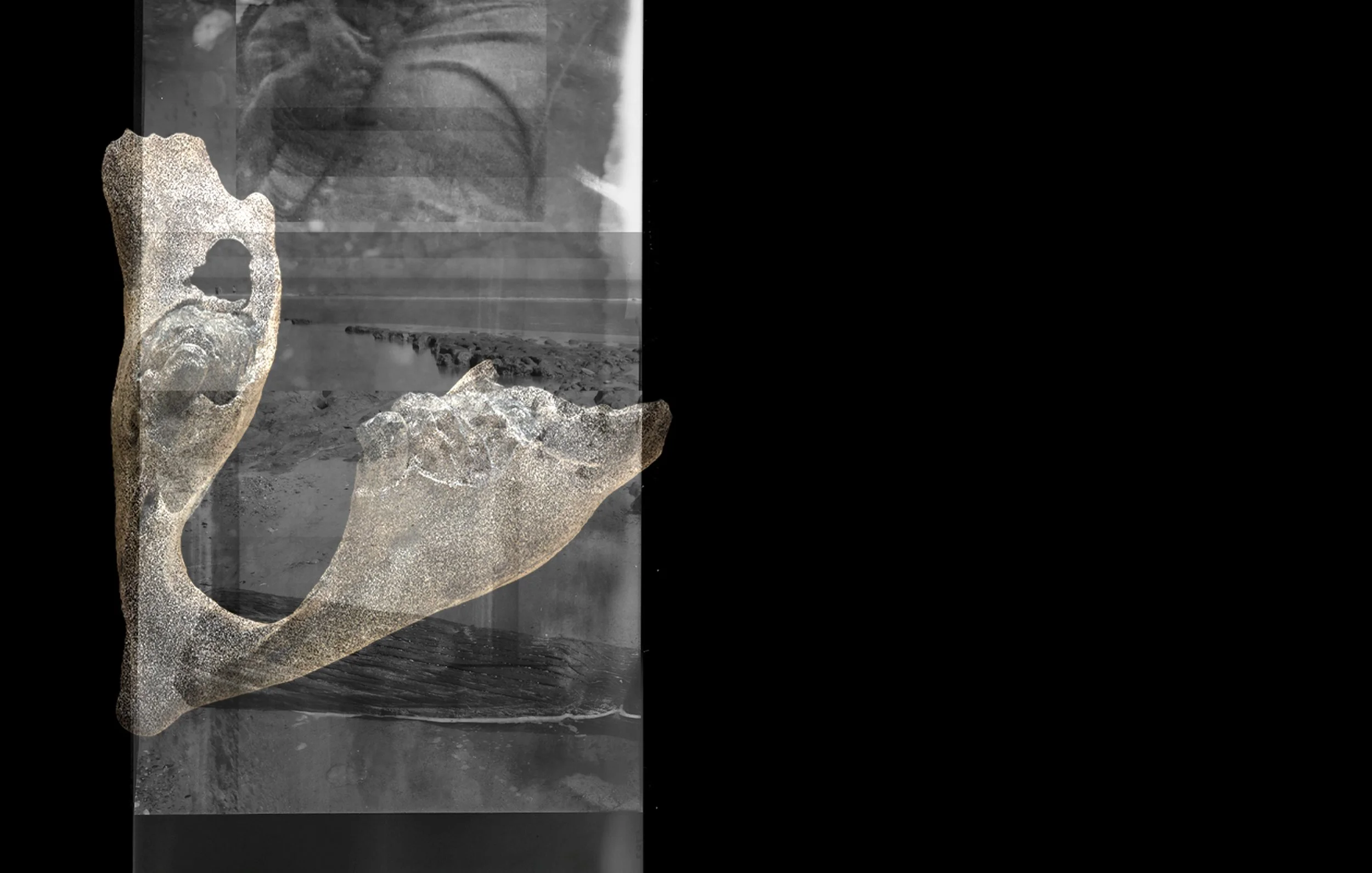
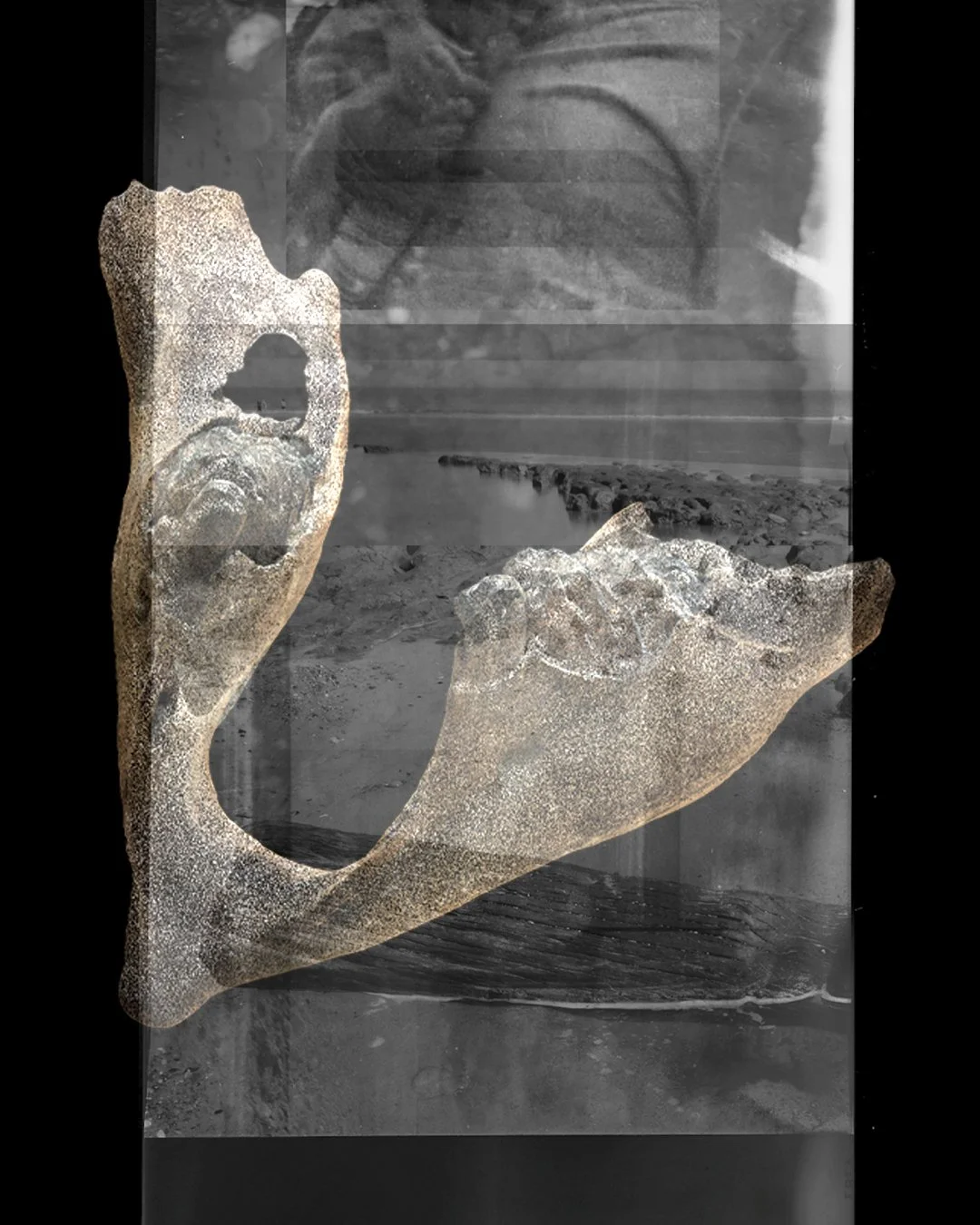
In the work, we enter into a fragmentary and undulating wetland landscape - draining, flooding and dissolving, and built using point cloud scans of artefacts including worked bone tools and geological samples from 20,000-6,000 years ago, from nationally significant prehistory collections. Several forms of observational recording from the present-day, including analogue photography, letter shapes sculpted in coastal clay using a typeface developed from my childhood handwriting, and field recording on the Maasvlakte, intersect the tracking of the landscape, suggesting a new entry point for drawing both parallels between the climate events of our deep past and the precarity of where we find ourselves today, and a study of the fundamental motivations of visual art and archaeology.
Gathering TIme at Portlantis, Rotterdam
Opening event: Saturday 31 October 2026 | 5-7pm (CEST)
This first public screening with talks by myself and Hans Peeters will see Gathering Time projected onto the surface of the Portlantis building. The projection will be viewable each day after-dark until 3 January 2027
Resurfacing Doggerland is a project financed by the Dutch Research Council (NWO) and Cultural Heritage Agency (RCE), aimed at the investigation of archaeological and palaeontological remains from the southern North Sea. Between 20,000 and 6000 years ago the area consisted of an extended landscape, called Doggerland, that drastically changed due to climate change and sea-level rise, and ultimately drowned after the last Ice Age. The big question is how this influenced the plants, animals and humans living in that landscape.
The research is in a sense a detective game. The thousands of finds brought together by collectors scouring the beaches over the past decades, searching for fossil animal remains and tools made by prehistoric humans, are small pieces of a puzzle with an unknown image. Using modern research techniques, we try to extract as much information as possible from these often little appealing fragments. We find out what humans and animals have been eating, which genetic relationships existed, which diseases they carried, what they looked like, what tools were used for and how these were made. And we try to understand how all this was influenced by the changing climate after the last Ice Age. The plant and animal world changed drastically due to climbing temperatures. The coastline shifted continuously due to sea-level rise, ultimately isolating the British Isles from the European mainland.
As much as we can tell about the finds themselves by means of research techniques, as scientists we also need ‘empathy’ – ‘informed fantasy’ is maybe a better characterization – to permit the representation of life in Doggerland. How did those people living there experience all those changes? How did it affect their connection to the landscape? Did it affect their cosmological beliefs? Questions to which the remains left behind do not directly provide answers. The information we get from our scientific methods in fact provides small building blocks for the stories we can tell about Doggerland. In a way, it is a quest comparable to that of visual artist Matt Fratson.
- Dr. Hans Peeters, Principal Investigator (Resurfacing Doggerland)